What Are Garage Door Rollers?
Types of Garage Door Rollers
Modern styles, classic designs, and durable commercial options tailored to your property.
Nylon Rollers
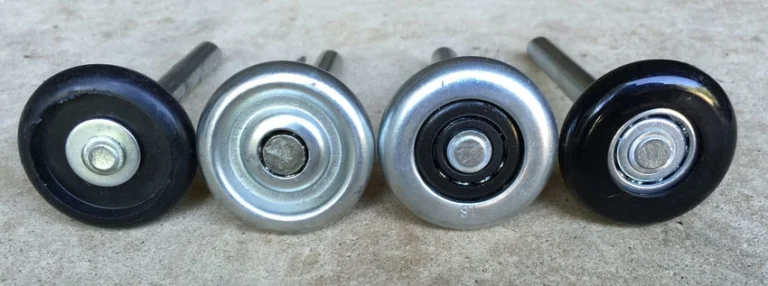
Nylon garage door rollers are the premium choice for residential applications. The nylon wheel runs quieter than steel and doesn’t require frequent lubrication. Quality nylon rollers feature sealed ball bearings that provide smooth operation for years. These rollers reduce noise by up to 75% compared to steel options, making them ideal for garages attached to living spaces or bedrooms.
Plastic Rollers
Basic plastic rollers are the most economical but least durable option. These are typically found on builder-grade doors and wear out quickly. We don’t recommend plastic rollers for replacement due to their short lifespan and poor performance.
Steel Rollers
Steel garage door rollers are the traditional, more affordable option. The steel wheel is durable but creates more noise during operation. Steel rollers require regular lubrication with grease or lubricant to prevent grinding sounds and ensure smooth function. They work well for detached garages where noise isn’t a primary concern.
Ball Bearing Rollers
The bearing type significantly impacts roller performance. Sealed ball bearing rollers (available in both nylon or steel) provide the smoothest, quietest operation. Non-bearing rollers are cheaper but wear faster and create more friction.
Signs Your Garage Door Rollers Need Repair or Replacement
What Causes Garage Door Roller Damage
Modern styles, classic designs, and durable commercial options tailored to your property.
Normal Wear and Tear
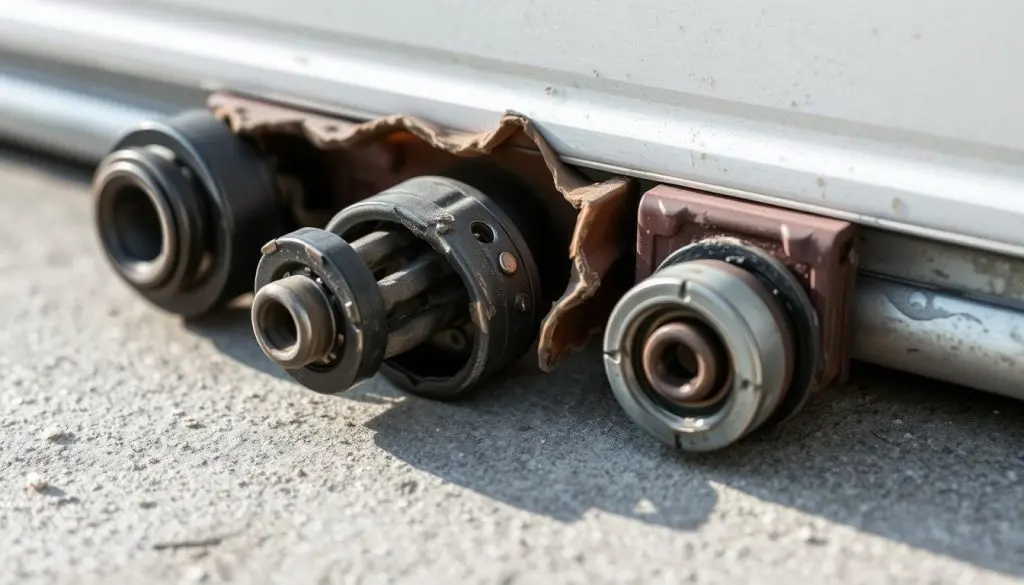
Every time your door opens and closes, rollers rotate thousands of times. Over years of use, even quality rollers eventually wear down. A garage door cycled 1,000 times annually will accumulate 10,000-30,000 cycles over its lifespan.
Lack of Lubrication
Steel rollers and non-sealed bearings require regular lubrication. Without proper grease application, metal-on-metal contact creates friction, heat, and accelerated wear. The wheel and bearing deteriorate faster when dry.
Dirt and Debris in Tracks
Accumulated dirt, dust, leaves, and debris create resistance as rollers attempt to slide through the rail. This contamination damages roller surfaces and bearings over time.
Misaligned Tracks
When tracks bend or shift out of alignment, rollers don’t sit properly in the channel. This creates uneven pressure, causing rollers to wear unevenly or even bend.
Age
Older rollers simply reach the end of their functional life. Steel rollers typically last 10-15 years, while quality nylon rollers can last 12-20 years with proper maintenance.
Low-Quality Rollers
Inexpensive plastic rollers or poorly manufactured products fail much sooner than premium options. Builder-grade rollers often need replacement within 5-7 years.
Our Garage Door Roller Repair Services
What Causes Garage Door Roller Damage
We set the standard for garage door service in the Pacific Northwest — trusted by thousands of homeowners and businesses.
Normal Wear and Tear
Every time your door opens and closes, rollers rotate thousands of times. Over years of use, even quality rollers eventually wear down. A garage door cycled 1,000 times annually will accumulate 10,000-30,000 cycles over its lifespan.
Lack of Lubrication
Steel rollers and non-sealed bearings require regular lubrication. Without proper grease application, metal-on-metal contact creates friction, heat, and accelerated wear. The wheel and bearing deteriorate faster when dry.
Dirt and Debris in Tracks
Accumulated dirt, dust, leaves, and debris create resistance as rollers attempt to slide through the rail. This contamination damages roller surfaces and bearings over time.
Misaligned Tracks
When tracks bend or shift out of alignment, rollers don't sit properly in the channel. This creates uneven pressure, causing rollers to wear unevenly or even bend.
Age
Older rollers simply reach the end of their functional life. Steel rollers typically last 10-15 years, while quality nylon rollers can last 12-20 years with proper maintenance.
Low-Quality Rollers
Inexpensive plastic rollers or poorly manufactured products fail much sooner than premium options. Builder-grade rollers often need replacement within 5-7 years.
Why Hire a Professional for Roller Repair
Modern styles, classic designs, and durable commercial options tailored to your property.
Safety Concerns
The garage door spring system holds dangerous tension. Releasing this tension improperly while accessing rollers can cause serious injury. The top roller on each side is particularly risky to replace without proper technique.
Proper Tools and Technique
Professionals use specialized tools including the right pliers, wrenches, and potentially a hammer to safely loosen and reinstall rollers. We know how to work around the spring and cable systems without causing damage.
Avoid Further Damage
Improper installation can bend tracks, damage hinges, or put stress on the bracket and bolt connections. A professional garage door technician prevents these issues through correct procedure.
Complete Inspection
We examine the entire door system during roller replacement, identifying other issues like worn springs, frayed cables, or misalignment that a homeowner might miss. This prevents future problems.
Warranty Protection
Our work comes with warranty on both parts and labor. If something fails prematurely, we’ll make it right. DIY attempts void manufacturer warranties and leave you responsible for any issues.
Quick, Efficient Service
An experienced pro completes roller replacement in under 1 hour typically. DIY attempts often take several hours and may require multiple trips to purchase additional parts or tools.
What Our Seattle Customers Are Saying
Real reviews from real homeowners throughout King County.


George did an excellent job replacing my garage door. He arrived a little later than planned due to another emergency, but he still completed the work on time and at a very reasonable price. The quality of his work was solid, and I appreciate his professionalism throughout the process.

I initially ordered the garage door from another company, but they delayed the delivery and even messed up the measurements. Since my house was about to go on the market, I called George. He came out the same day to measure the door and promised installation within a week. He delivered exactly as promised and got the door installed just before the listing went live. He did an excellent job with the installation, charged a fair price, and was very professional throughout the entire process. I highly recommend him.

I live in Puyallup. One of my springs broke they made sure to get the best part and installed fast .

They did a great job servicing my garage door in Bothell. Got my broken spring replaced fast and it was fairly priced too. Thank you guys.

The new garage door is the most beautiful part of the house now. Great job done in time and with excellent communication.

Had my old garage door replaced, worked with George for the whole process, bottom-line: top-notch quality, attention to details, and overall great value, highly recommend. It seems that this is a challenging project, but George took the time and got everything working great. He managed to fit the whole system in a tight space, without disrupting anything that is in there. It was late when the work was done, yet he stayed longer to clean up the space and put everything back to its place. Really glad I choose to work with George and hope more people will hire him/his company.

Need Garage Door Roller Repair?
Don't let worn rollers damage your garage door opener or other components. Our quick roller repair service uses quality parts to restore smooth, quiet operation. Upgrade to premium nylon rollers for long-lasting performance and reduced noise.
+1 (206) 771-1152Why Choose Premium Overhead for Roller Repair
We set the standard for garage door service in the Pacific Northwest — trusted by thousands of homeowners and businesses.
Premium Roller Options
We stock both nylon and steel garage door rollers in various quality levels. Whether you want budget-friendly steel or premium quiet nylon with sealed ball bearings, we have options to fit your needs and pricing expectations.
Experienced Technicians
Our team has performed thousands of roller replacements across all door types and brands. We handle the job safely and efficiently, completing most services in under an hour.
Same-Day Service
When your door is noisy or operating poorly, you need fast help. We offer same-day service in most cases, getting your door back to smooth function quickly.
Comprehensive Warranty
We warranty both the rollers we install and our labor. If you experience any issues with our work or the parts we provide, we'll return to make it right at no additional cost.
Complete Door Inspection
Roller replacement includes a full door inspection. We check your springs, cables, tracks, hinges, and opener to ensure everything works together properly. This catches potential problems before they become expensive repairs.
FAQ
Garage door roller replacement cost typically ranges from $200-$400 for complete service on a standard residential door. This includes labor ($150-$300) plus materials. Nylon rollers cost $15-$30 per pair, while steel rollers run $8-$15 per pair. Most doors have 10-12 rollers total, so material costs are $80-$180 for all rollers depending on type chosen. The total price depends on whether you select nylon or steel, the number of rollers your door has, and labor costs in your area. Replacing all rollers at once costs less per roller than multiple service calls.
Garage door roller lifespan depends on the type and usage frequency. Quality nylon garage door rollers with sealed ball bearings last 12-20 years with proper maintenance. Steel rollers typically last 10-15 years when lubricated regularly. Plastic rollers wear out in just 5-7 years. Factors affecting longevity include cycle frequency (how often the door opens daily), whether tracks are clean and aligned, climate conditions, and maintenance quality. A door cycled 1,000 times annually accumulates 10,000 cycles over 10 years. Premium rollers handle this wear better than budget options.
Yes, we strongly recommend replacing all garage door rollers at the same time rather than individual ones. When one roller fails, others are likely near the end of their functional life too since they all experience similar wear. Replacing all rollers ensures even performance, prevents the door from operating unevenly, and avoids paying for multiple service calls. It’s more cost-effective to complete roller replacement in one visit. Mixed old and new rollers can create imbalanced movement and noise. Complete replacement also allows upgrading to quieter nylon rollers throughout for consistent quiet operation.
Nylon garage door rollers are better for most residential applications. They operate significantly quieter than steel (up to 75% noise reduction), don’t require regular lubrication when equipped with sealed ball bearings, and last longer (12-20 years vs 10-15 years). The main advantage of steel garage door rollers is lower upfront cost. Steel works fine for detached garages where noise doesn’t matter. However, for attached garages or homes where the garage is near bedrooms, nylon’s quiet performance justifies the modest price difference. Most homeowners prefer nylon after experiencing the reduced noise.
While possible, we don’t recommend DIY garage door roller replacement for most homeowners. The job requires releasing spring tension, which is dangerous without proper training and tools. The top roller on each side is particularly risky to access. Improper technique can bend tracks, damage hinges, or cause injury. You’ll need specific tools including pliers, wrenches, and potentially a manual for your specific door model. Professional installation takes under 1 hour and includes proper lubrication, track inspection, and warranty protection. Unless you have experience with garage door repair and the necessary tools, hire a professional for safety and quality results.
Noisy garage door rollers are the most common cause of loud operation. Worn steel rollers create grinding sounds as damaged wheels struggle to slide smoothly along the rail. Lack of lubrication on steel rollers or non-sealed bearings causes squeaking and rubbing noises. Damaged or cracked wheels vibrate against tracks. Other noise sources include worn hinges, loose hardware that needs tightening, dry or damaged garage door springs, or a noisy chain-drive opener. To reduce noise, replace worn rollers with nylon garage door rollers, lubricate your garage door components regularly, and ensure all bolt and bracket connections are tight.
Areas We Serve
Premium Overhead Garage Door provides professional installation, repair, and maintenance services throughout the Greater Seattle area and King County. Same-day appointments available in most areas.